Generic selectors
Exact matches only
Search in title
Search in content
Post Type Selectors

Category: Past News

Quality relationships help make life what it is

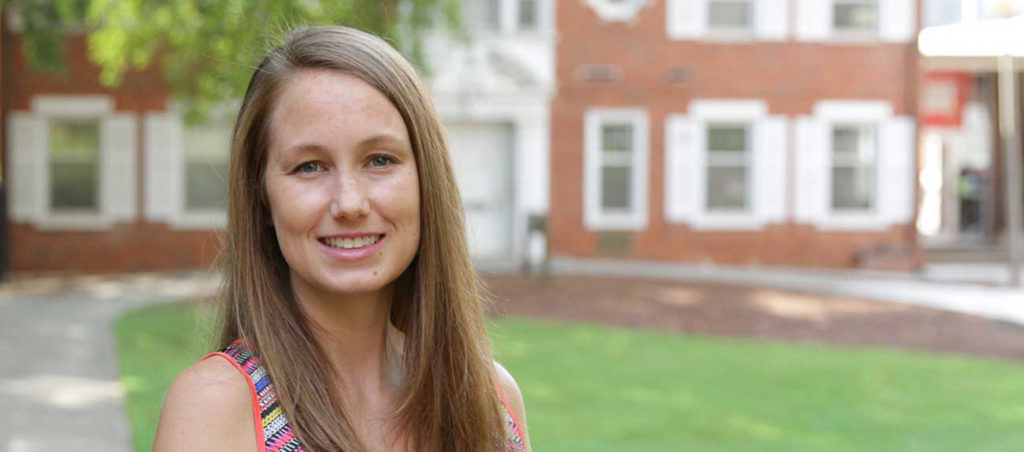
A woman with long brown hair smiles outdoors in front of a red brick building with white trim and green lawn.


Owens Institute for Behavioral Research Fellow, Catherine O’Neal spends her time studying how people—especially couples and families—relate to each other and how they can do it better. She began training as a marriage and family therapist but fell in love with the research while earning her Ph.D. from UGA’s Department of Human Development and Family Science.

“I want to understand how people connect and engage with each other,” said O’Neal, now an associate research scientist in that department within the College of Family and Consumer Sciences. “A lot of my research comes from my own questions about why relationships matter and my desire to facilitate healthy relationships as a way to improve individuals’ well-being.”

The stability of strain

Looking at how relationships endure over time is a strong focus of O’Neal’s work. One recent study displayed the stability of marital conflict over long periods. Using a sample of 250 Midwestern couples in lasting heterosexual marriages (some for 40 years or more), she found that those who had high levels of conflict early in midlife were also at risk for high levels of conflict 15 years later, when they were older adults.

“In general, conflict was consistent over time,” she said. “The other thing this study demonstrated was that, at least in this sample of couples, even relationships with high amounts of conflict can be stable. That is, not everyone who experiences marital conflict gets a divorce.”

Currently O’Neal is looking at the consequences of social relationships, like mental and physical health, to see what happens over time and how these aspects relate to each other: How do shifts in physical health relate to the quality of mental health, and how does an improvement in social relationships correlate with physical health?

One type of strain that particularly interests her is financial stress. How do couples experience financial strain, and what implications does it have for other areas of their lives, including interactions with loved ones and physical and mental health? Is the stress relieved when finances improve or do its detrimental effects stick around?

“Our hypothesis,” O’Neal said, “is that financial stress often initiates what we refer to as a ‘chain of insults,’ where it triggers life events, such as changing jobs, and other stresses like depression, poor physical health and conflictual interactions. Moreover, we are examining whether financial stress amplifies the impact of such life events.

“Decades later, we’re seeing that the effects of financial stress tend to stay with you, even when the finances are no longer shaky.”

O’Neal is leveraging her work on financial stress to help look for intervention and prevention solutions. For instance, she is working with the U.S. Air Force to measure the effectiveness of financial training modules to help personnel manage their finances and well-being at important life “touchpoints,” such as the birth of a child, relocation or retirement. Aiming to provide “just in time” financial knowledge may lead to better financial decisions and, ultimately, well-being, she said.

Working with colleagues in engineering, journalism and mass communications, and sociology, Catie O’Neal is testing a new way to keep military families connected when a member is on deployment. This virtual reality environment allows family members to interact in settings more typical of home life, such as backyards, living rooms and basketball courts. “The idea,” she said, “is that military family members not only get to talk to each other, but the family room allows them to engage in activities together—much like they do at home.” (Image courtesy of UGA Virtual Experiences Laboratory, College of Engineering)

Little things mean a lot

In another example of how risk can result in resilience, O’Neal is working to help military families stay connected when they are geographically separated. In collaboration with OIBR Fellow  Sun Joo “Grace” Ahn in the Grady College of Journalism and Mass Communication, Kyle Johnsen in the College of Engineering, and OIBR Fellow Dawn Robinson in the Franklin College of Arts and Sciences, she and the team use virtual reality headsets to help families engage in activities that are not usually possible when a family member goes on deployment.

“We have a virtual family room where there is a basketball hoop, checkers and a backyard where you can throw the ball back and forth,” O’Neal explained. “The idea is that military family members not only get to talk to each other, but the family room allows them to engage in activities together—much like they do at home.”

As the COVID-19 pandemic has shown, these fleeting moments of connection in family life can take on much greater importance when they’re suddenly gone.

“You know, before COVID, my research coordinator and I would go to lunch, where we would talk about work but also talk about so many other little things that come up in conversation,” O’Neal said. “I miss those small connecting moments, and I believe that we as a society are missing out on these small but meaningful social connections during the pandemic.”

In particular, the extreme amount of stress that nurses and other medical professionals are going through during the pandemic occupies her mind a lot these days.

“What are the long-term consequences,” she asked, “of being under this severe strain for an extended number of hours every day and then having to come home and shift roles from caring for patients to taking care of a family, without having any significant amount of time to process the events you’ve just experienced at the hospital?”

She also wonders about the emotional toll on families who have lost a loved one to COVID.

“Research with military families has examined ambiguous loss, where loss occurs without closure or clear understanding. Families who have experienced the death of a loved one during COVID have often received no or limited information on what happened and have had little time to say goodbye. It’s possible these scenarios may also create ambiguous loss and even experiences of post-traumatic stress,” she said.

One part of her work she especially enjoys is interpreting others’ research to make it accessible and meaningful to broader audiences. Drafting reports for the Department of Defense on topics relevant to the military and policymaking means she must write for a vastly different audience than the peers who read her research papers. While one style calls for nearly every potentiality to be covered, the other demands efficiency of words and time. Writing for both audiences has made her better at communicating her own research.

“As a social scientist whose work started in marriage and family therapy, the thing that I believe most strongly is that relationships matter,” she said. “The quality of the different types of relationships—including parent-child, between spouses, members of extended families, colleagues—they all help make life what it is.”


This article was written by David Terraso for the UGA Office of Research.
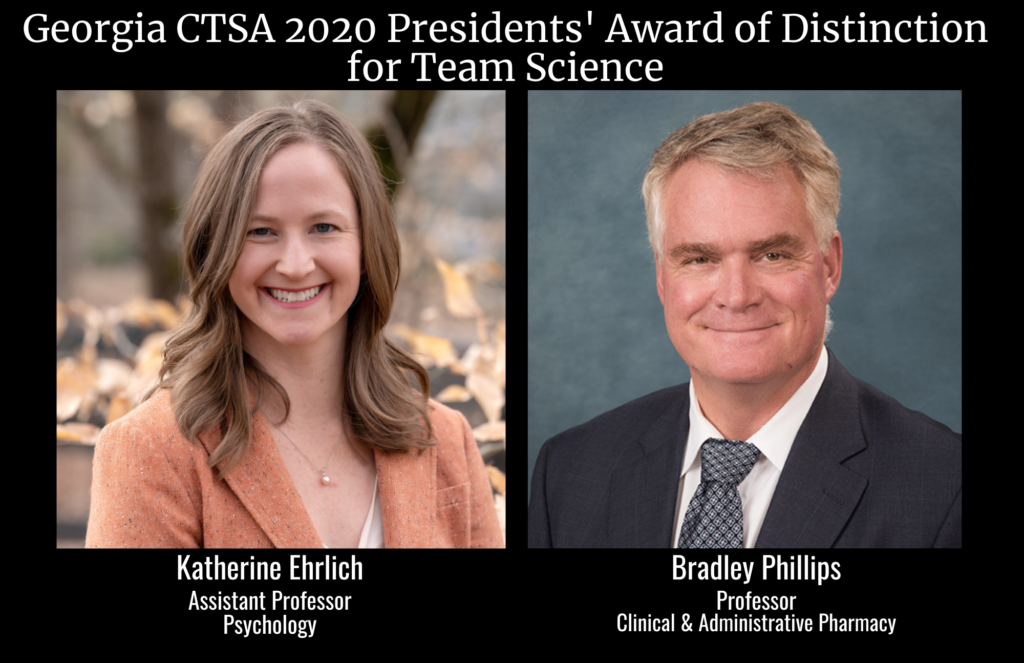
OIBR Fellows are Recipients of Georgia CTSA 2020 Presidents’ Award of Distinction for Team Science


Two professional headshots side by side: Katherine Ehrlich, Assistant Professor of Psychology, and Bradley Phillips, Professor of Clinical & Administrative Pharmacy, with award title above.

Owens Institute for Behavioral Research Fellows Katherine Ehrlich, Psychology, and Bradley Phillips, Clinical & Administrative Pharmacy, along with Ted Ross, Infectious Diseases at UGA, were recently awarded the Presidents’ Award of Distinction for Team Science by the Georgia CTSA. This honor is bestowed upon their multi-disciplinary research team in recognition for their innovative, high-functioning teamwork and synergy. Together they have built a diverse, multidisciplinary team of collaborators, each contributing to their success. Since 2017, their team has done amazing work to develop new tools and processes for quality-driven research focused on immune responses to influenza vaccination.

The Presidents’ Award of Distinction for Team Science, conferred by the Presidents of the academic institutions of the Georgia Clinical and Translational Science Alliance (Georgia CTSA), including Emory University, Georgia Institute of Technology, Morehouse School of Medicine and University of Georgia, recognizes and promotes excellence in multi-disciplinary research teams within the Georgia CTSA. This award is presented to an outstanding multi-disciplinary research team in recognition of its innovative and impactful research that has, or will likely, advance clinical and translational science and positively impact human health. 

This year’s winning team of the President’s Award of Distinction for Team Science will receive $5,000 towards their team science research program and were recognized at the 2021 Southeast Regional Clinical and Translational Conference (March 4-5, 2021).

Read more here.

Katherine Ehrlich Receives Award for Distinguished Scientific Early Career Contributions to Psychology

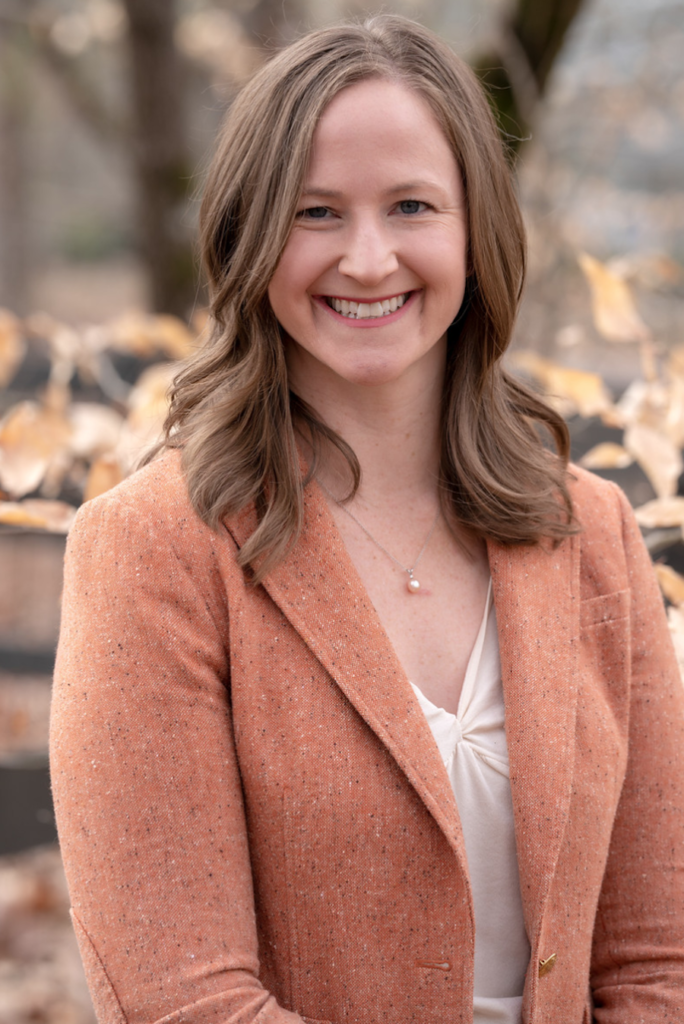
A woman with shoulder-length brown hair, wearing an orange blazer and white blouse, smiles while seated outdoors with autumn leaves in the background.

American Psychological Association has awarded the Distinguished Scientific Early Career Contributions to Psychology award to OIBR Fellow, Katie Ehrlich.

Since 1974, the APA Early Career Awards have been given to recognize the large number of excellent, early career psychologists. Recipients of this award may not have held a doctoral degree for more than nine years. The 2020 recipients of the APA Scientific Contribution Awards were recognized by the 2019 Board of Scientific Affairs and selected by the 2019 Committee on Scientific Awards.

For purposes of this award, psychology has been divided into 10 areas, with five considered each year. The areas considered in 2020 were animal learning and behavior, comparative; developmental; health; cognition/ human learning; and psychopathology.

Katie was recognized for outstanding research that elucidates how children’s social relationships affect their physical health. Her  innovative research brings together insights from multiple subareas of psychology, including health, developmental, and social, to address questions of great importance for public health and human development. Her studies are characterized by sophisticated theory, rigorous methodology, and impressive creativity. Dr. Ehrlich’s theoretical and empirical work is already leaving a substantial mark on the field and paving the way for an integrative biosocial science of human development.

Katie is an Assistant Professor of Psychology at the Franklin College of Arts and Sciences at the University of Georgia and the director of the Health and Development Laboratory. To learn more about her research, go here.


Traditional gendered patterns of child care persisted during the COVID-19 shutdown

A woman works at a desk with a computer while holding a young child on her lap and writing in a notebook.

Traditional gendered patterns of child care persisted during the COVID-19 shutdown, with more than a third of couples relying on women to provide most or all of it, according to a study from OIBR Fellow and University of Georgia researcher Kristen Shockley.

Some previous research has found that typical familial patterns may get upended during crises, but that’s not what Shockley and her colleagues found in the early months of the COVID-19 shutdown.

Kristen Shockley

“Most people have never undergone anything like this before, where all of a sudden they can’t rely on their normal child care, and most people’s work situation has changed too,” said Shockley, associate professor of psychology in the Franklin College of Arts and Sciences. “We thought this would be a chance for men to step in and partake equally in child care, but for many couples we didn’t see that happen.”

In mid-March, as schools and day cares closed and many shifted to remote work, Shockley and her colleagues quickly created a survey targeting dual-earner couples with at least one child under age 6.

“When the wife does it all, not surprisingly, the outcomes are bad for the couple.” — Kristen Shockley

“My son was 15 months old when this all started, and I know firsthand that you can’t just plop younger kids in front of a TV or expect them to do their schoolwork,” she said. “We were particularly interested in people who really had to provide active child care.”

The team initially surveyed 274 couples, conducting a follow-up survey with 133 of the same couples in May. The study, published in the Journal of Applied Psychology, assessed marital tension, health and job performance in addition to child care strategies.

“When the wife does it all, not surprisingly, the outcomes are bad for the couple,” Shockley said. “It’s not just bad for the wife, it’s also bad for the husband, including in terms of job performance although his work role presumably hasn’t changed. When one person’s doing it all, there’s a lot of tension in the relationship, and it’s probably spilling over into the husband’s ability to focus at work.”

Though 36.6% of couples relied on the wife to provide most or all child care, 44.5% used more egalitarian strategies, and 18.9% used strategies that were not clearly gendered or egalitarian.

Egalitarian strategies included alternating work days, planning daily mini shifts that included both work and child care for husband and wife, and alternating shifts that changed day to day based on the couple’s work needs.

“When you look at the more egalitarian strategies, we found the best outcomes for people who were able to alternate working days,” Shockley said. “The boundaries are clear. When you’re working, you can really focus on work, and when you’re taking care of the kids, you can really focus on the kids. But not everybody has jobs amenable to that.”

When both people were working at home, planned mini shifts and needs-based alternation had similar well-being outcomes for the couple, but job performance was higher for couples who used needs-based alternation, according to Shockley.

“I think that’s due to the communication that comes with it, and the flexibility within your dyad at home,” she said. “For couples who are continuing to work remotely, I would say needs-based alternation with night-before communication about work needs is probably better than having fixed shifts.”

Although the paper doesn’t include qualitative quotes, Shockley remembers the participants’ comments quite clearly.

“People were saying, ‘I’m at my breaking point,’ and this was just two weeks in. A lot of people said, ‘I’m just not sleeping.’ You could feel people’s struggle, and there was a lot of resentment, particularly when the wife was doing it all,” she said.

“This really highlights some infrastructure issues we have with the way we think about child care in this country. The default becomes, ‘Oh well, the wife is going to pick up the slack.’ It’s not a long-term solution.”

Shockley also noted that the couples surveyed have relatively high incomes.

“Compared to the country, the household income of our study is pretty high,” she said. “This might look different in lower-income samples. We might see totally different strategies emerging, particularly if there’s less possibility for remote work.”

Co-authors include OIBR Affiliate, Malissa A. Clark and Hope Dodd at UGA and Eden B. King at Rice University.

Article written by: Allyson Mann
Source: UGA Today

Steven Beach Named UGA Regents Professor

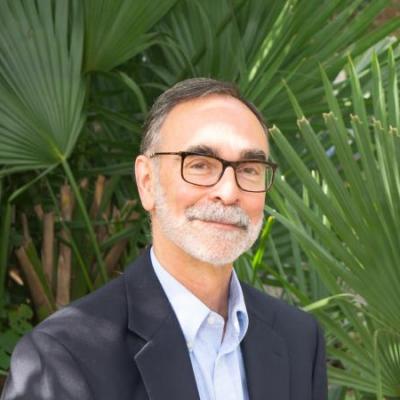
A man with gray hair and beard, wearing glasses, a dark blazer, and a light blue shirt, stands in front of large green palm leaves.

The University’s newest Regents Professor is OIBR’s past Director, Steven R.H. Beach, Distinguished Research Professor in the department of psychology in the Franklin College of Arts and Sciences. This honor is bestowed by the Board of Regents of the University System of Georgia for faculty whose scholarship or creative activity is recognized both nationally and internationally as innovative and pace-setting.

Beach’s scholarship focuses on the way that community, family and marital process affect mental and physical health.  His pioneering work and collaborations have shown that strengthening close relationships, including marriage and parenting relationships, can play a critical role in reducing depression and physical health problems, and can buffer the impact of stress from economic and social factors. Beach also serves as co-director of the Center for Family Research Clinical Program in the Owens Institute for Behavioral Research at UGA.

He has over 250 peer-reviewed articles in leading journals, as well as multiple books and book chapters. He has received over $60 million in grant funding from organizations including the National Cancer Institute and numerous other divisions within the National Institutes of Health. Among other notable work, Beach recently initiated a program of research with African American families living in rural communities in Georgia, implementing the Promoting Strong African American Families. This program focuses on strengthening marital, co-parenting and parent-child relationships to help foster resilience to economic hardship and experiences of discrimination.

Beach has received numerous awards, including the Family Psychologist of the Year Award from Division 43 of the American Psychological Association, the President’s Award of Distinction for Team Science by the Georgia Clinical and Translational Science Alliance, and the Best Family Economics Paper of the Year by the National Council on Family Relations.

Beach is the former director of the Owens Institute for Behavioral Research, serving from 2003 to 2013. He is currently a Fellow of the institute and a member of the OIBR Executive committee.

The Regents Professor appointment was recently approved by the board of regents and is effective July 1, 2021.

Robert Vandenberg elected a Fellow of the Academy of Management

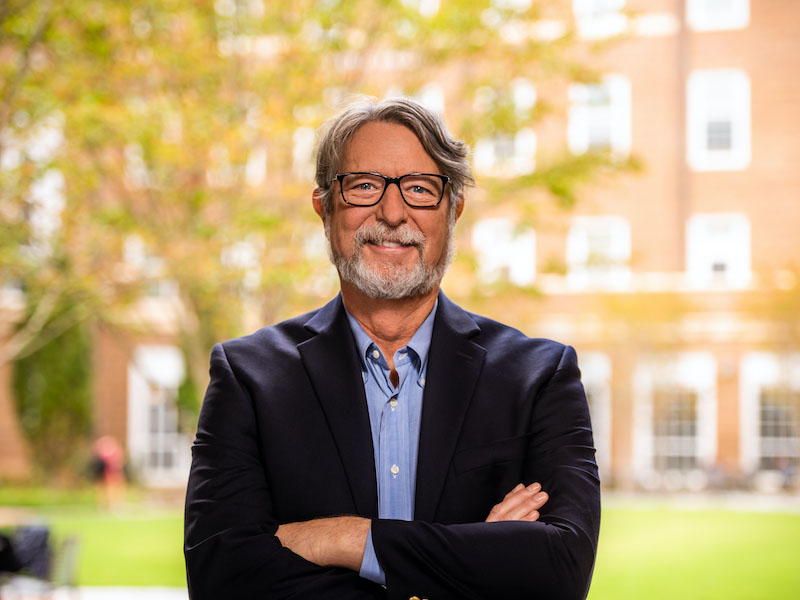
A middle-aged man with gray hair and glasses, wearing a blazer, stands outdoors with arms crossed in front of a blurred building and greenery.

For four decades, OIBR Fellow and Terry College of Business management professor Robert Vandenberg has found new ways to accurately assess the attitudes, feelings and behaviors that employees experience in the workplace.

Vandenberg, who serves as head of the Department of Management and the Robert O. Arnold Professor of Business, was recently inducted as a Fellow of the Academy of Management.

“Bob’s work has laid the groundwork for organizational behavior and health care researchers to better understand how employees relate to their employers,” said Mike Pfarrer, associate dean for research and graduate programs at the Terry College of Business. “In addition, Bob is an internationally recognized methodologist, making his research accessible across disciplines.”

“His induction into the Academy of Management Fellows Group not only shines a light on the far-reaching impact of his work but also on the quality of research being conducted every day at the Terry College of Business.”

Induction as an AOM Fellow distinguishes those who have made enduring contributions to the science and practice of management. Vandenberg has spent his career using an organizational behavior lens to investigate what impacts employee motivation and dedication to an organization and how workers’ attitudes towards their employers impact productivity. Over time, his work has been cited by other scholars more than 20,000 times.

In the 1990s, Vandenberg started investigating the barriers that emerge when researchers try to compare workers from different cultures. Cultural norms and biases of the researchers can be a concern, but Vandenberg also looked at the cultural norms of the people being studied.

People from different cultures often interpret survey questions differently, he found. Researchers needed to account for this phenomenon, which came to be known as measurement invariance, in their analyses.

The culmination of this work was a seminal paper published in 2000 in the journal Organizational Research Methods, which set out the best practices and tactics for management researchers to correct for measurement invariance in their work. Ever since, the paper has provided part of the bedrock for the methodology now used by social scientists to account for differences in cultural attitudes in survey data. It’s been cited by more than 6,000 researchers as a guide for undertaking their own studies.

Vandenberg also introduced new methods of statistical analysis and better ways to measure change in employee’s attitudes and performance over time. He has extensively studied workplace health and safety, high-involvement work practices and employee commitment, and his research methods have contributed to more than $12 million in grant funding for studies into various management topics.

“Bob has emerged as one of the leading experts on research methods in the entire field of management,” Herman Aguinis wrote in his nomination of Vandenberg. Aguinis is the Avram Tucker Distinguished Scholar at George Washington University. “This means that his contributions are even more impactful compared to those of us who focus on a particular substantive domain. The reason is that contributions to methodology influence many, if not all, substantive domains across management subfields ranging from micro to macro.”

Article written by: Merritt Melancon
Source: Terry News

Owens Institute celebrates a half-century of collaborative research

University of Georgia researcher Gene Brody

Gene Brody, co-director of OIBR’s Center for Family Research, has worked with all five directors at the institute. He believes the institute’s unique interdisciplinary framework is responsible for “making our science great.” (Photo by Amy Ware)

Back in 1970, bringing researchers from different disciplines together to address problems was a novel concept in academia.

Owens took over UGA’s former Social Science Research Institute in 1970 as it was renamed the Institute for Behavioral Research. With his reputation as an interdisciplinary thinker in the field of applied psychology and his likeable personality, Owens was the right person at the right time.

The reimagined institute’s primary purpose was “to provide the University of Georgia with a distinctive and distinguished interdisciplinary thrust in the behavioral sciences.” The stated benefit would be “to increase the university’s visibility in the behavioral sciences, and thereby to enhance its appeal to students, faculty and granting agencies.”

The institute was named for Owens at its 40th anniversary after his wife, Barbara, donated $1 million to create its endowment.

“A lot of universities paid lip service to interdisciplinary research, but this wasn’t much of a reality [at most universities]. So the institute and Bill’s vision was groundbreaking and one that he realized,” said Abraham Tesser, who served as the institute’s second director.

University of Georgia researcher Steven Beach

Former OIBR Director Steven Beach is also co-director of the Center for Family Research, where he and his colleagues explore why some Black children in the rural South are so resilient, despite the hurdles they encounter lacking resources and access to critical needs, like good schools, health care, transportation and employment opportunities. (Photo by Amy Ware)

An interdisciplinary vision

As a researcher during World War II—working for the Bureau of Naval Personnel in test construction and personnel psychology—Owens learned in a military context that breaking down disciplinary boundaries was a better approach to solving broad problems. It helped to energize cohesion.

“We kind of take it as a given now that, to answer big problems in society, you have to approach it from lots of different perspectives,” said Eby. “Bill was talking about these things before everyone else. He was a pioneer of really thinking about problems from very different and complementary disciplinary perspectives.”

Owens spent much of the early years at OIBR recruiting some of the top research stars across campus in social and behavioral sciences and bringing them together to discuss ideas.

“He was very selective,” said Steven Beach, Center for Family Research co-director and a former OIBR director. “One of the things that happened early on was Bill set the stage for people respecting the potential contributions of people outside of their own departments.”

The result has been an evolution of influence across the wider university as the institute’s reins passed through five different directors in its 50 years at UGA, incorporating centers of excellence, junior faculty development and grant stewardship along the way.

“Now it became a hub for interdisciplinary research,” said Tesser, professor emeritus of psychology. “It became a place where lots of people within the university found a home and put a stronger emphasis on research than even in their home departments. Funded research became much more important.”

Since Owens became founding director in 1970 and served through 1984, there have been four successors—Tesser (1984-94), Rex Forehand (1994-2003), Beach (2003-2013) and Eby (2013-present). Each has steered changes and expansion of OIBR services. The interdisciplinary research going on now crosses boundaries much further afield than 30 years ago. Eby, for instance, has helped expand the institute’s reach beyond the social and behavioral sciences, including into the biological sciences.

“We’ve really broadened our scope and have affiliates across many colleges and schools, including public health, public administration, international affairs, education and more,” Eby said. “Our reach has grown dramatically.”

The founding principle that has guided the institute since the beginning has never changed—a spirit of collaboration.

“You can look at UGA, and it feels like a big business with these silos,” said Forehand, former Regents’ Professor of psychology at UGA. “What OIBR did was bring people together. It launched collaboration but also individual careers. OIBR did things that departments didn’t or couldn’t do.”

Brody, who was appointed Regents’ Professor at UGA in 2004, has worked with all five OIBR directors in his 44 years at UGA. He believes the institute’s unique interdisciplinary framework is responsible for “making our science great.”

Heading2

Heading3

Heading4

Centers of collaboration

Prime examples of OIBR’s collaborative mission are its centers of excellence.

The work coming out the Center for Family Research, established in 1985 as one of the first OIBR collaborative research centers, brings together scholars from diverse disciplines to explore innovative ways of examining family life.

Brody, Beach and 12 colleagues in CFR—including professor of human development and family science Steven Kogan, the 2020 William A. Owens Creative Research Award winner—explore why some Black children in the rural South are so resilient, despite the hurdles they encounter lacking resources and access to critical needs, like good schools, health care, transportation and employment opportunities.

Working with researchers from UGA’s Franklin College of Arts and Sciences and College of Family and Consumer Sciences, CFR followed several thousand families, studying their development and resilience from childhood through young adult.

“We were able to identify clusters of parenting practices, extrafamilial family relationships and community protective factors that worked together despite these challenges to create really confident persons,” Brody said.

From their research, CFR created and tested prevention programs aimed at pre-adolescent, adolescent and young African American adults to foster positive development. The Strong African American Families programs were proven effective and are now implemented in communities around the nation, including in Georgia.

“These prevention programs for African American families are the only ones in the country that have been scientifically validated and that families around the nation are receiving,” Brody said. “Without the scientists and staff at CFR and the support that OIBR has always given us, it would never have happened.”

University of Georgia researcher Paula Lemons teaching class

Paula Lemons is director of OIBR’s SEER Center—Scientists Engaged in Educational Research—and principal investigator of the $3 million NSF-sponsored DeLTA Project, which aims to transform STEM education at UGA at the institutional, departmental and course levels. (Photo from 2017 by Andrew Davis Tucker)


The SEER Center—Scientists Engaged in Educational Research—includes 40 faculty, postdocs and graduate students across UGA who perform research in collegiate STEM (science, technology, engineering and mathematics) education to help improve and transform how science is taught and learned in colleges and universities.

With members from UGA’s Franklin College; Mary Frances Early College of Education; College of Veterinary Medicine; College of Engineering; College of Agricultural and Environmental Sciences; Warnell School of Forestry and Natural Resources; and the AU/UGA Medical Partnership, the cooperation reaches across all STEM education research projects.

SEER naturally found a home with OIBR thanks to its broad portfolio.

“The researchers who are part of OIBR align very well with those of us who do STEM education research,” said Paula Lemons, professor of biochemistry and molecular biology, who serves as director of the SEER Center.

Lemons is also the principal investigator of the $3 million NSF-sponsored DeLTA (Department and Leadership Teams for Action) Project, which aims to transform STEM education at UGA at the institutional, departmental and course levels by addressing and improving teaching practices, support policies, and leadership development as well as diversity and inclusion.

With a core team of 12 faculty from SEER, Lemons said the DeLTA project will work with up to 100 faculty from all STEM departments at UGA by the time the project is completed in five-to-six years.

“At the course and instructor level we’re bringing in boots-on-the-ground faculty to what we call our instructional action team,” she said.

University of Georgia researcher Grace Ahn

After completing OIBR’s mentoring and grant-writing program, Sun Joo “Grace” Ahn secured a five-year, $3.3 million grant from the National Institutes of Health to develop and implement a virtual reality fitness after-school program with the Metro Atlanta YMCA. (Photo by Andrew Davis Tucker)

 
Critical faculty support

In 1990, the institute created a program to pair selected junior faculty with established mentors to learn how to write effective grant proposals. Former vice president for research Joe Key called establishing the mentoring program “one of the major achievements on this campus.”

“The first few years nobody was funded, and then all of a sudden it started to snowball,” Forehand said. “It was a realization that took several years to take root.”

Eby’s path to director included her own participation in the mentoring program after joining UGA’s industrial-organizational psychology faculty in 1996. The experience, she said, was “career-changing.” Beach, OIBR director at the time, ultimately talked her into succeeding him when he stepped down in 2013.

“There’s always been emphasis on developing talent within university ranks and helping junior faculty navigate what is often a very complex system without a lot of guidance,” Eby said. “One day they’re graduate students, and the next they’re faculty trying to figure it out on their own.”

Sun Joo “Grace” Ahn, associate professor in the Grady College of Journalism and Mass Communication, found success as one of the 114 faculty researchers to complete the mentoring and grant-writing program.

The effort helped her secure a five-year, $3.3 million grant from the National Institutes of Health to develop and implement a virtual reality fitness after-school program with the Metro Atlanta YMCA. Using Fitbits and kiosks, the technology integrates a virtual pet to motivate more active lifestyles in at-risk children. It involves colleagues from five different colleges—engineering, education, public health, family and consumer sciences, and journalism and mass communication—and is currently running in 20 Atlanta public schools.

“I came in with almost zero knowledge, and they basically turned a completely green person into someone funded with a $3.5 million grant. They had this entire package I was deeply impressed with: training programs, mentoring, pre- and post-award services,” said Ahn, the director of Games and Virtual Environments Lab at Grady. “If I had to do this alone, I just couldn’t do it. OIBR staff is helping me every step of the way.”

Over the last several decades, OIBR has provided what Eby calls “comprehensive, cradle-to-grave” grant support for faculty in social/behavioral sciences.

“It was something that was sorely missing across all the social and behavioral sciences; in retrospect it was such an astonishing gap,” Beach said. “OIBR has emerged as a foremost provider of those support services, and people really need that and appreciate it.”

As a service unit housed within the Office of Research, OIBR offers tailored pre-award application preparation assistance as well as specialized post-award grants management support from a dedicated staff.

“It’s incredibly important because it allows the faculty to focus on the science of the grant and not all of the administrative and bureaucratic details that are very overwhelming on large-scale interdisciplinary research projects,” Eby said.

Dorothy Carter, assistant professor in industrial-organizational psychology, calls OIBR’s pre- and post-award services “one of the best resources we have on UGA’s campus.”

“As academic researchers, we’re not exactly accountants,” Carter said. “I have grant funding from four different agencies—NASA, the Army, the National Science Foundation and NIH—and each has very different rules as far as budgeting, timing, expectations [and] distribution. For me, managing a grant would be a full-time job. Having OIBR staff navigating all those things allows the research personnel the time to do what we actually are hired to do—research.”

University of Georgia researcher David Okech at conference table with students

David Okech runs the UGA-based African Programming and Research Initiative to End Slavery, focused on measurably reducing human trafficking in Africa and funded by $20 million from the U.S. Department of State. He credits OIBR with providing the experience and mentoring he needed to strengthen his funding application. (Photo from 2019 by Andrew Davis Tucker)


Ever-expanding impact

The ultimate measure of OIBR’s success, of course, is not the cumulative value of its grants over 50 years but the impact of the work generated by the researchers it has empowered.

That impact reaches far beyond campus and the state of Georgia. One of the biggest potential examples is the work in human trafficking conducted by David Okech, an associate professor in the School of Social Work.

Okech, a native of Kenya, received and directs the university’s first large grant from the U.S. Department of State to expand the UGA-based African Programming and Research Initiative to End Slavery, focused on measurably reducing human trafficking in Africa. The project involves people from the Franklin College and the College of Public Health with a total budget of more than $20 million from the U.S. Department of State.

“It’s a really important, complex issue, and he has amassed a massive project to try to alleviate human trafficking,” Eby said.

Okech says his affiliation with OIBR, and his experience participating in the institute’s Grantsmanship Development Program, including the mentoring he received from Steven Kogan, OIBR director of faculty development, provided a foundation for him to shift his research focus to this critical global issue.

“OIBR was very helpful in finding me the right persons who could strengthen my case for funding,” Okech said, “and allow me to do the research and science that is my main calling.”

Article written by: Scott Michaux
Source: UGA Research
Photography by: Amy Ware, Andrew Davis Tucker and Beth Chang


Gene Brody & Colleagues Awarded $10 million NIH Center of Excellence Grant

A man in a light blue shirt stands outdoors in front of a playground climbing net, with brick buildings and trees in the background.

Photo by Amy Ware

Growing up in poverty and experiencing racial discrimination can affect physical health, and a research team led by Owens Institute Fellow, Gene Brody, a Regents’ Professor and director of the Center for Family Research have been awarded a $10 million grant from the National Institutes of Health to explore how.

Brody’s team, which includes Steven Beach, OIBR Fellow, professor in psychology and CFR co-director; Brett Clementz, OIBR Fellow and professor in psychology; Katherine Ehrlich, OIBR Affiliate and assistant professor in psychology; Steven Kogan, OIBR Fellow and Athletic Association Professor of Human Development; and Lawrence Sweet, OIBR Fellow and Gary R. Sperduto Professor in Clinical Psychology, will build on 15 years of research funded by previous NIH Center of Excellence awards to advance next-generation research of risk, resilience and health among Black young people living in the southeastern United States.

Growing up in poverty is a powerful variable that forecasts all facets of development— particularly health—throughout a person’s life, according to Brody’s research. In the United States, he said, 20% of all children live near or below the poverty line, and the figures are higher for rural Black youth, whose poverty rates hover around 50%.

“Because many Black children live in economic hardship, they’re at elevated risk for health problems across their life span,” said Brody, principal investigator for the grant. “They are more likely to have shorter life spans than white residents who grow up in the same places.”

The grant will fund studies to address three questions:

  • How does economic hardship affect the immune system and the functioning of brain circuits that influence health and well-being?
  • Can prevention programs protect Black youth from the deleterious effects of poverty and racial discrimination on their immune systems and neural circuitries?
  • How are health risks in the immune system and in the brain transmitted across three generations, and what shields children from the transmission of health risks from one generation to another?


The grant will also provide a mentoring program for early career scientists, who will work with more experienced researchers from prevention science, neuroscience, health psychology/immunology, developmental psychology, clinical psychology and biological anthropology.

The center will serve as a national resource for several groups: Black families who want to shield their children and adolescents from the health effects of stress; scientists interested in studying health disparities; and public health practitioners who are developing prevention programs for young people.

The  Center for Family Research was founded 35 years ago to bring together scholars from diverse disciplines to explore innovative and dynamic ways of examining family life. Scientists at CFR conduct basic research involving rural Black families and children to understand why many families and children are resilient despite living in very challenging conditions.

“We take that (research) information and use it to inform the development of prevention programs for rural Black children and youth and their families,” Brody said. “These programs that we’ve tested in randomized clinical trials and have shown to be effective are now being disseminated around the nation. Families from Harlem, New York, San Francisco, Washington, D.C., Chicago, Pittsburgh, Selma, Mobile and places in between are participating in these prevention efforts.”

Additional co-investigators include Edith Chen, Tom McDade, Greg Miller, Robin Nusslock and Todd Parrish, all at Northwestern University, and Michael Windle at Emory University.

CFR is a center of the Owens Institute for Behavioral Research and receives support from the National Institute of Child Health and Human Development, the National Institute on Alcohol Abuse and Alcoholism and the National Institute on Drug Abuse, among others.

Social & Behavioral Science Spotlight – Kristen Bub

A woman with short brown hair and wearing a black blouse with white dots smiles at the camera against a gray background.
Kristen Bub

Kristen Bub
OIBR Affiliate
Associate Professor, Educational Psychology

Topic:  Impact that COVID-19 has on pre-k children’s school readiness skills as they transition to kindergarten and then through first grade.

Dr. Kristen Bub is working with the Clarke County School District to examine the impact that COVID-19 has on pre-k children’s school readiness skills (academic, social, behavioral and relational) as they transition to kindergarten and then through first grade.

COVID-19 and specifically the lengthy disruption to in-person instruction is unprecedented and thus we do not know the impact it may have on children’s learning and social/emotional development. Dr. Bub believes that pre-kindergarten children transitioning to kindergarten are particularly vulnerable to the disruption and change in instructional format because they were just beginning to develop their school readiness skills.

Dr. Bub’s research team will be collecting information entirely online on the children’s academic skills, social skills, behavior problems, and relationship skills. In addition, her team is gathering information from pre-k teachers about their practices during COVID, their experiences with COVID, and their contact with participating children.

The first wave of data collection has been completed and Dr. Bub hopes to use the first results to determine the impact to the Fall of 2020 when the children return to school.

Research data will be gathered 5 times across 2 years (spring pre-k, fall and spring kindergarten, and fall and spring first grade).

Social & Behavioral Science Spotlight – Tessa Andrews


Tessa Andrews

Tessa Andrews
OIBR Fellow
Associate Professor, Genetics
Topic: How biology faculty made the rapid transition to online instruction during #COVID19

Dr. Tessa Andrews is studying how biology faculty made the rapid transition to online instruction this spring, including what teaching knowledge they leveraged in the process and what they learned. This unprecedented situation in higher education has created a unique opportunity to learn about teaching knowledge because faculty across the country are simultaneously facing a similar and completely novel challenge. Her team has collected most of the data and we will be analyzing the data over the summer.

Very preliminary impressions of the data indicate that many faculty are prioritizing concern for their students above all else in their teaching decisions. They are also seeing evidence that some faculty are learning new things about their students and about teaching that they intend to apply to face-to-face instruction in the future.

This research is important because teacher knowledge—beyond content knowledge—is crucial to student learning but there is very little research to understand important teacher knowledge in college faculty. The rapid transition to remote instruction provides a unique challenge that brings to light the knowledge most central to faculty teaching.

“The faculty appreciated the chance to share about their experiences in an interview. I think that is because they have worked really hard to serve their students, but most of that work is not visible to colleagues,” noted Dr. Andrews.

If you would like to learn more about Dr. Andrews and her research, check out her lab website.