Generic selectors
Exact matches only
Search in title
Search in content
Post Type Selectors

Category: Past News

Laura German Named New Director for Center for Integrative Conservation Research

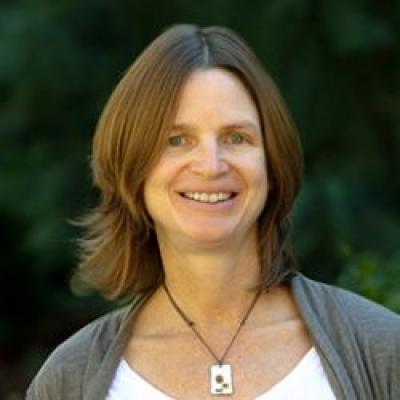
A woman with straight, shoulder-length brown hair smiles at the camera. She is wearing a gray cardigan, white top, and a pendant necklace. Green foliage is in the background.


The Center for Integrative Conservation Research (CICR) has named Dr. Laura German its new director. German, an affiliate with the Owens Institute for Behavioral Research, and a professor of anthropology in UGA’s Franklin College of Arts and Sciences, has worked closely with CICR since 2012. Her current scholarship draws on critical agrarian, development and legal studies to elucidate the politics of land governance, with a focus on sub-Saharan Africa. As director, she will draw on a longer history of work on land-use and governance spanning the social and biophysical sciences and both applied and academic research traditions.

As the Center’s director, German will support CICR’s mission to further collaborative training, research and problem-solving, while helping to position CICR within challenging conversations surrounding the role of conservation science and practice in ongoing forms of Indigenous marginalization and erasure. She also hopes to expand the Center’s partnerships beyond academia with organizations on the front lines of social and environmental change as well as those critical of these efforts, as a means to strengthen the Center’s relevance to ongoing efforts to address “grand challenges” – be they climate change, competing uses of arable land and freshwater, or contested sovereignties.

German hopes to work with graduate students and faculty on campus, while centering the voices of BIPOC scholars and activists further afield, to enhance collective awareness of the crucial importance of social justice to environmental health, broadly conceived.

Dr. Nate Nibbelink, German’s predecessor, has been CICR’s director since 2014. Nibbelink recently accepted a position as the Associate Dean for Research in the Warnell School of Forestry and Natural Resources.

Center for Integrative Conservation Research (CICR)

CICR was founded in 2007 and supports innovative conservation and sustainability research and training through its interdisciplinary collaborations with public and private partners. The work of CICR’s students and faculty responds to a key challenge facing conservation efforts: identifying the practices and policies that sustain ecosystems and serve human needs. For more information, see  http://cicr.uga.edu/.

OIBR Associate Director Selected for SEC Academic Leadership Program

Dr. Jody Clay-Warner


Jody Clay-Warner, Josiah Meigs Distinguished Teaching Professor in the department of sociology, part of the UGA Franklin College of Arts and Sciences, and associate director of the Owens Institute for Behavioral Research has been named Fellow of the 2021-2022 Southeastern Conference Academic Leadership Development Program.

Throughout the fellowship year, participants deepen their knowledge of topics such as budgeting, accreditation, student affairs, and diversity and inclusion while learning how UGA and other SEC institutions navigate the challenges and opportunities of contemporary higher education. Dr. Clay-Warner and three other UGA faculty fellow members will participate in two SEC ALDP workshops, the first of which will be hosted by UGA in October.

“The SEC ALDP program gives faculty from UGA and other SEC universities a chance to learn more about leadership roles in higher education,” said Meg Amstutz, associate provost for academic programs and UGA’s SEC ALDP liaison. “The program offers networking opportunities with SEC colleagues as well as guidance from senior university officials over the course of the year.”

The fall workshop at UGA will include opportunities for the fellows to meet with UGA President Jere W. Morehead and Provost S. Jack Hu, networking with former UGA Fellows, and tours of campus facilities such as the Special Collections Libraries, the State Botanical Garden of Georgia and Sanford Stadium.

Clay-Warner focuses her research on understanding responses to injustice in various forms, including criminal victimization. She was a 2017-2018 participant of UGA’s Women’s Leadership Fellows program and a recipient of the Georgia Sociological Association Sociologist of the Year Award, as well as UGA’s Owens Creative Research Award. Clay-Warner also co-directs the Laboratory for the Study of Social Interaction in the department of sociology.

Launched in 2007, the SEC ALDP program is part of the SEC’s academic relations department. The program is a collaboration between the SEC universities aimed at preparing faculty members for future leadership roles within the university. Past fellows at UGA have been appointed to leadership positions including vice provost, dean, associate provost and associate vice president.

To learn more or see a list of past fellows, visit https://provost.uga.edu/resources/faculty-resources/fellowships/administrative-fellows-program/.

OIBR Grant Development Program Participant is Awarded $2.5 Million from NSF

A man in business attire sits on the edge of a table in a modern office setting, smiling at the camera.


OIBR Grant Development Program participant, Michael Cacciatore, Associate Professor, Public Relations, has been awarded a $2.5 Million grant from the U.S. National Science Foundation’s Advancing Informal STEM Learning program.

Michael Cacciatore, co-director of the Center for Health and Risk Communication at Grady College, received funds from the U.S. National Science Foundation to support research for PBS Digital Studios’ TERRA, a science-themed hub on YouTube, as they launch a new slate of STEM content.

Dr. Cacciatore is a co-principal investigator for the grant that also includes Dr. Sara Yeo of the University of Utah.

The grant from NSF will support a two-pronged PBS initiative to create STEM-related, short-form videos and conduct follow-up research to better understand how and why these videos attract underrepresented groups.

“Dr. Cacciatore’s work exemplifies the very best in collaborative research on issues of great importance,” said Charles N. Davis, dean of Grady College. “It’s a reminder that all grant-funded research contains a communicative element, and that Grady College faculty can help design and implement rock-solid empirical studies of message design and effectiveness.”

Cacciatore explains that PBS not only wants to expand its audience with new and underserved audiences, but the organization also recognizes the importance of bringing research into decisions so they are informed by data. He expects part of the research to focus on the role of humor in communicating science, an area PBS already utilizes and that Cacciatore studies.

“For me, this project builds naturally from a lot of the work I’m already doing on humor as a tool for science engagement,” Cacciatore, an associate professor in the Department of Advertising and Public Relations, said of the three-year grant. “At the same time, this project places more of an emphasis on the practical side of things. We’ll have a chance to collect data, analyze the underlying trends in that data, and then see our work influence the content PBS is producing.”

Cacciatore is excited to work with content producers like PBS.

“From an institutional perspective, I love the idea of PBS, arguably the most important provider of educational programming, partnering with UGA, the birthplace of higher education. I think it’s a perfect marriage,” Cacciatore said.

Currently, YouTube’s most popular STEM creators are disproportionately white and male, and viewer data and PBS surveys suggest that Black and Hispanic viewers, as well as women overall, are underrepresented in audiences for STEM content online. With support from the NSF grant, PBS Digital Studios aims to remedy this by expanding PBS TERRA to new, diverse audiences, and examining its impact.

Specifically, PBS Digital Studios plans to launch new series and create special episodes for existing series that explore STEM through a variety of lenses, including humor and popular culture. These STEM series will feature underrepresented voices, especially Black and Hispanic science communicators, in front of and behind the camera and seeks to broaden the audience for STEM content online.

“With the help of NSF, we hope to inspire the next generation of scientists by offering diverse and educational programming in a new way. At PBS, we are committed to presenting viewers with topical content that they cannot find anywhere else— and PBS TERRA is a perfect example. This is incredibly important work, and we are excited to innovate with STEM content and study the impact this content has within underrepresented communities,” said Sylvia Bugg, Chief Programming Executive and General Manager, General Audience Programming at PBS.

The research will be used to show how these groups search for and engage with content related to science, technology, engineering and math. Cacciatore and Yeo will also test hypotheses on the effects of STEM videos featuring scientists and experts that are women, Black and/or Hispanic presenting science content in a variety of ways. A goal of the project is to measure audiences’ attitudes and engagement with science as well as their perceptions of scientists.

The NSF’s AISL program seeks to advance new approaches to and evidence-based understanding of the design and development of STEM learning opportunities for the public in informal environments; provide multiple pathways for broadening access to and engagement in STEM learning experiences; advance innovative research on and assessment of STEM learning in informal environments; and engage the public of all ages in learning STEM in informal environments.

Author:  Sarah Freeman/Stephanie Kennard,  freemans@uga.edu/skkennard@pbs.org
For more information about this project:  Michael Cacciatore,  mcacciat@uga.edu

Jamie Cooper named interim associate dean in the College of Family and Consumer Sciences

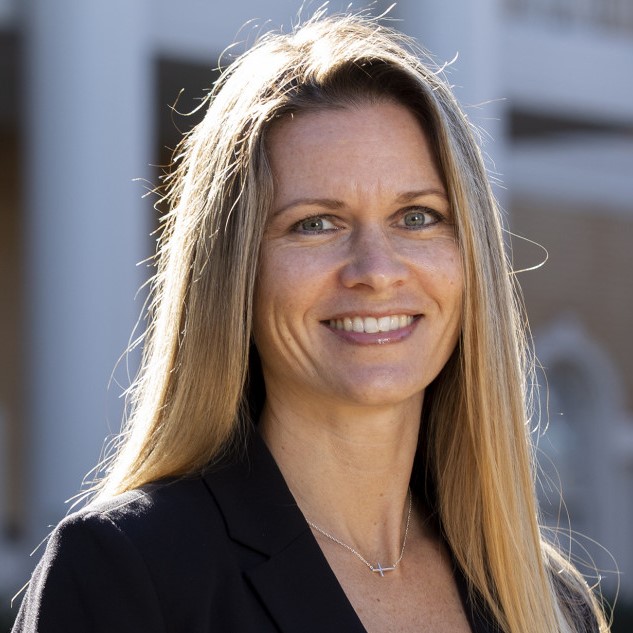
A woman with long blonde hair wearing a black blazer and a cross necklace smiles outdoors in front of a building with white columns.


OIBR Affiliate, Dr. Jamie Cooper, Professor in the department of nutritional sciences and director of the UGA Obesity Initiative, has been named as the interim associate dean in the College of Family and Consumer Sciences effective August 1, 2021.

Cooper will continue in her roles as the Bill Flatt Professor in the department of nutritional sciences and director of the UGA Obesity Initiative.

“In addition to conducting important research and serving as an outstanding mentor to several graduate students, Dr. Cooper has provided excellent leadership in her role as director of the UGA Obesity Initiative,” FACS Dean Linda Kirk Fox said. “She will be an asset to the college in this new role as interim associate dean.”

As interim associate dean, Cooper will collaborate with department heads, undergraduate and graduate coordinators and administrators at the college and university levels to help grow the college’s reputation and increase financial resources in support of academic programs.

Cooper also will provide oversight for the college’s Student Success and Advising Center and will begin to facilitate the college’s strategic planning goals related to growing research, innovation and entrepreneurship.

“I’m excited about this opportunity and look forward to collaborating with college leadership to continue the upward trajectory of FACS,” Cooper said.

Cooper participated in the UGA Women’s Leadership Fellows Program in 2019-20, was a member of the FACS research, innovation, and entrepreneurship strategic planning committee and served on the FACS faculty advisory committee. She also has served as the department’s graduate coordinator in addition to directing the emphasis in sports nutrition.

Prior to her arrival at UGA in 2015, Cooper served as associate department chair in the department of nutritional sciences at Texas Tech University.

Sheri Worthy, the Samuel A. and Sharon Y. Nickols Professor who serves as associate dean for academic programs, was named the college’s interim dean in May by UGA Provost Jack Hu, effective Aug. 1 upon Fox’s retirement after 10 years in the role.

More about Jamie

Article written by: Cal Powell
Source: UGA Today

Eby Inducted as 2021 Academy of Management Fellow

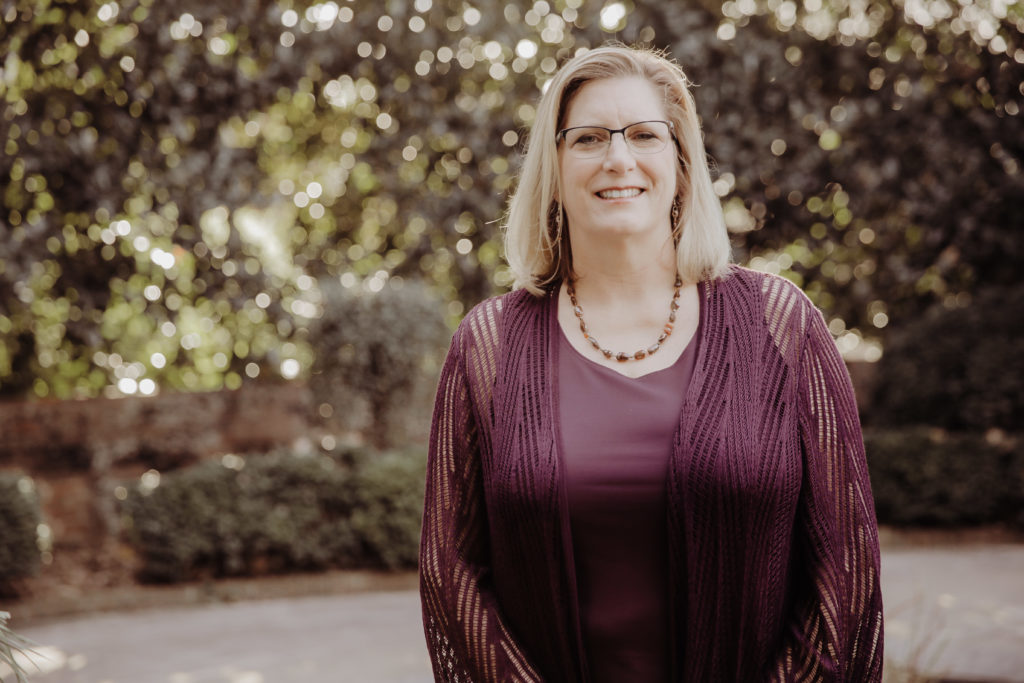
A woman with blond hair and glasses stands outdoors, wearing a purple top and cardigan, with greenery blurred in the background.


OIBR director, Lillian Eby, has been inducted as a 2021 Fellow of the Academy of Management. The Fellows Group recognizes and honors members of AOM who have made significant contributions to the science and practice of management. In addition to celebrating achievement in management, the Fellows Group provides opportunities for community and a forum for discussion among the people who have been recognized. For 2021, 14 members were selected to be honored with induction.

Lillian Eby, Professor of Psychology, joined the University of Georgia (UGA) in 1996. She is a Fellow of the American Psychological Association, the Society for Industrial and Organizational Psychology, and the Owens Institute for Behavioral Research at UGA. Her research interests center on mentoring relationships, factors that predict individual career success, worker well-being, and the intersection of work and family life. She has published over 125 peer-reviewed journal articles and this work appears in scholarly outlets such as the Journal of Applied Psychology, Personnel Psychology, Journal of Vocational Behavior, Organizational Behavior and Human Decision Processes, Journal of Management, among others. Eby has also co-edited three books, one on mentoring in organizational, educational, and community settings (Allen & Eby, Blackwell Press), one on the effect of relationships on employee attitudes, behavior, and well-being (Eby & Allen, Taylor/Routledge Press), and one on work and family (Allen & Eby, Oxford University Press). She is former Associate Editor of Personnel Psychology as well as the Journal of Applied Psychology. Currently, she is the Editor-in-Chief of the Journal of Applied Psychology. In addition to her active scholarship, Eby serves as the Director of the Owens Institute for Behavioral Research, a service unit under the Office for Research that promotes and supports interdisciplinary social and behavioral science at UGA.

Learn more about the 2021 AOM Fellows.

Anne Shaffer named associate dean of UGA’s Graduate School

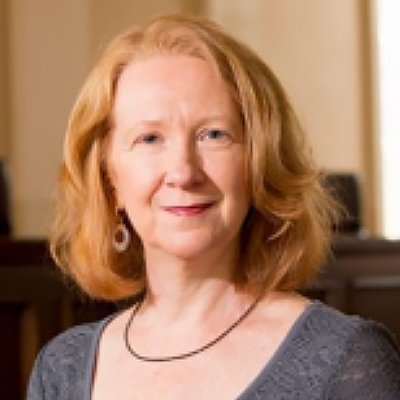
A woman with short brown hair and a blue top smiles at the camera, wearing a pendant necklace, against a gray background.

OIBR Distinguished Scholar, Dr. Anne Shaffer, has been named the associate dean of the University of Georgia’s Graduate School by Ron Walcott, the vice provost for graduate education and dean of the Graduate School. In this position, she will be responsible for academic affairs and will support the development and implementation of strategic initiatives.

As an associate professor in the Franklin College of Arts and Sciences’ psychology department with dual appointments in the clinical psychology and brain and behavioral sciences programs, Shaffer has served as the graduate coordinator for the department since 2017. She has also served as an Administrative Fellow in the Office of Inclusion and Diversity Leadership in the dean’s office of Franklin College of Arts and Sciences since January 2020. She is an elected member of University Council, serving on the Human Resources committee and previously on the Faculty Affairs committee. Shaffer is a selected participant in this year’s Leadership Institute for Women in Psychology, sponsored by the American Psychological Association, with prior participation in UGA’s Office of Faculty Affairs Future Leaders program and the Faculty Leadership Institute.

Shaffer’s research focuses on risk, resilience, and development in the family context, with an emphasis on emotion regulation and communication. She has published more than 60 peer-reviewed articles and her research is supported by multiple grants from the National Institutes of Health, targeting the development of novel interventions and measures of parenting.

Jean Martin-Williams, chair of the internal search committee, said they were impressed by Shaffer’s record in research and student mentoring that showed a strong commitment to equity and justice in graduate education. They noted her prior experiences in graduate education point to her abilities to strengthen collaborations with campus partners in innovative, student-focused ways.

With a record of mentorship in her department and on campus, Shaffer has served as a mentor in the Gateway to Graduate School and TRIO McNair Scholars programs, and in the Center for Undergraduate Research Opportunities. She is a member of the UGA McCoy-Hutchinson Graduate Mentoring Academy and a trained facilitator in the Entering Mentoring curriculum offered by the Center for the Improvement of Mentored Experiences in Research.

“Dr. Shaffer’s experience in working with graduate students brings an added dimension to our work in the Graduate School and will help us to expand our capacity to enhance their academic and personal well-being,” Walcott said. “Her ability to work with colleagues across the university will help us to build exemplary graduate programs and recruit exceptional students as part of our strategic efforts to grow graduate education.”

“I am honored by the opportunity to promote graduate education at UGA, and to serve the Graduate School’s mission of inclusive excellence. I look forward to working with the broader graduate community in pursuit of these goals,” Shaffer said.


Article written by: Judy Milton
Source: UGA Today


OIBR Health Disparities Seed Grant Program Announcement

The Owens Institute for Behavioral Research (OIBR) is pleased to announce that we are now accepting applications for faculty seed grant projects on in the area of Health Disparities.  All faculty in the social and behavioral sciences are encouraged to apply. In line with the mission of OIBR, projects must demonstrate a commitment to interdisciplinary research and, as outlined in the program announcement, lead to a full grant proposal to be submitted through OIBR or, if submitted through the PI’s home unit, notification should be given to OIBR that a proposal is resulting from the project.

Below you will find the OIBR Health Disparities Seed Grant Program Announcement (application instructions and details regarding the review process) as well as the OIBR Seed Grant Submission Form.  Please note all completed applications are due on June 7, 2021, and must be submitted electronically as a single combined PDF to the Outreach and Communications Manager, Andrea Horsman, at ahorsman@uga.edu.  Questions about allowable expenses not referenced on the instructions, or any other facet of the seed grant program, should be directed to Jody Clay-Warner, Associate Director of OIBR, at jclayw@uga.edu.

OIBR Health Disparities Seed Grant Call.final

Health Disparities Seed Grant_submission_form_FY22_Ver2

Annual Gene Brody Symposium Set for March 24

A man with glasses wearing a dark suit, patterned tie, and light shirt, smiling at the camera with a neutral gray background.

Dr. Sherman James


The Owens Institute for Behavioral Research will host its annual Gene Brody Symposium on Wednesday, March 24 at 3pm.

Join Dr. Sherman James, a social epidemiologist and the originator of the “John Henryism” theory, to learn how the theory came about, what we have learned since he first proposed it in the early 1980’s, and what outstanding questions remain.

The legend of John Henry tells of a post-Civil War black man who proved himself greater than a steam powered drill, but afterwards, died from exhaustion. Whether the legend is interpreted as a tragedy, a heroic tale, or both, the story contains a sober truth for all Americans. There are many examples of African Americans who, like John Henry, overcome humble backgrounds and systemic barriers to achieve great success, but at what costs to their health?

Dr. Sherman James is the Susan B. King Distinguished Professor Emeritus of Public Policy at Duke University. He was a professor of epidemiology at the University of North Carolina – Chapel Hill (1973-89) and the University of Michigan (1989-03). At Michigan, he was the John P. Kirscht Collegiate Professor of Public Health and has received numerous awards and honors in his prolific career.

More event details.

Annual William A. Owens Virtual Lecture Set for March 15

A middle-aged man with gray hair and a blue jacket sits indoors, smiling at the camera with his hand resting on his chin.

The Owens Institute for Behavioral Research will host its annual William A. Owens Lecture virtually on March 15 at 11:30 a.m.

Dr. Mark van Vugt will give the lecture, titled “COVID-19 and the Workplace: Insights from the Evolutionary Behavioral Sciences.” van Vugt will use an evolutionary psychological perspective to understand the short and potential long-term consequences of the current pandemic for the workplace. He will focus on five trends that may each have important implications for the way work organizations are designed, how leaders and managers operate, and how employees do their work. Each of these trends signifies important mismatches between old and new work practices that, if not addressed properly, could destabilize work organizations in the long run.

van Vugt is a professor of evolutionary psychology, work and organizational psychology at the Vrije Universiteit Amsterdam, the Netherlands, and director of the Amsterdam Leadership Lab. He is also a Research Fellow at the Department of Politics and International Relations, University of Oxford. He studies work and organizational behavior from an evolutionary perspective.

For more information and to register for this webinar, visit https://t.uga.edu/6Nu.

Virtual Screening of Picture a Scientist March 4-6, 2021

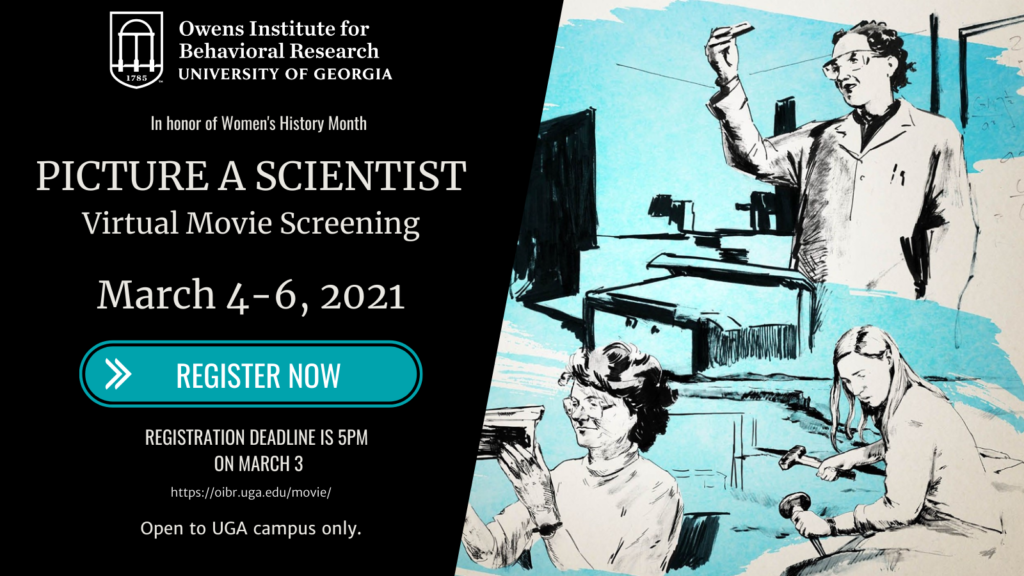
Promotional graphic for a virtual screening of Picture a Scientist, March 4–6, 2021, hosted by the Owens Institute for Behavioral Research at UGA, featuring illustrated scientists.


PICTURE A SCIENTIST
A Film by Sharon Shattuck and Ian Cheney

PICTURE A SCIENTIST is a feature-length documentary film chronicling the groundswell of researchers who are writing a new chapter for women scientists. A biologist, a chemist and a geologist lead viewers on a journey deep into their own experiences in the sciences, overcoming brutal harassment, institutional discrimination, and years of subtle slights to revolutionize the culture of science. From cramped laboratories to spectacular field stations, we also encounter scientific luminaries who provide new perspectives on how to make science itself more diverse, equitable, and open to all.

FEATURED SCIENTISTS

Nancy Hopkins is a molecular biologist and professor of biology at the Massachusetts Institute of Technology. She is known for her research identifying the role genes play in longevity and cancer predisposition in adult fish, as well as for her work promoting equality of opportunity for women scientists in academia. She is a member of the National Academy of Sciences, the Institute of Medicine of the National Academy, and the American Academy of Arts and Sciences.

Raychelle Burks is a professor of analytical chemistry at St. Edward’s University in Austin, Texas. Her research focuses on developing low-cost colorimetric sensors for detecting chemicals of forensic interest, including explosives and regulated drugs. As a science communicator, Burks has appeared on the Science Channel’s Outrageous Acts of Science, the American Chemical Society’s Reactions videos, Royal Society of Chemistry podcasts, and at genre conventions such as DragonCon and GeekGirlCon. Burks was awarded the 2020 American Chemical Society Grady-Stack award for excellence in public engagement.

Jane Willenbring is a geomorphologist and professor of geology at the Scripps Institution of Oceanography, and director of the Scripps Cosmogenic Isotope Laboratory. Willenbring’s research examines the evolution of the Earth’s surface, especially how landscapes are affected by tectonics, climate change, and life on Earth. She is a 2018 Geological Society of America Fellow, and the recipient of the Antarctica Service Medal and the National Science Foundation CAREER Award.

We hope you will join us for this important and provocative film.

For more information and to REGISTER GO HERE. (Registration ends at 5pm, March 3, 2021)