Generic selectors
Exact matches only
Search in title
Search in content
Post Type Selectors

Category: Past News

Dr. Lillian Eby Incoming Editor of the Journal of Applied Psychology

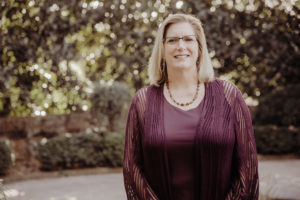
A woman with blond hair and glasses stands outdoors, wearing a purple top and cardigan, with greenery blurred in the background.

Dr. Lillian Eby, current director of the Owens Institute for Behavioral Research and a professor of psychology, has been named the incoming editor of the Journal of Applied Psychology.

Having served as associate editor of the Journal of Applied Psychology as well as associate editor of Personnel Psychology, Dr. Eby said,I am truly honored to have been selected by my peers for this important role and excited by the opportunity to pay it forward to a field that I love.

The journal is uniquely poised to provide evidence-based, practical advice to improve the experience of work for employees as well as enhance individual, team, and organizational success.

It also plays an important role in advancing the conceptual understanding of workplace and employment phenomena. Much of the research published in the Journal of Applied Psychology also has important implications for social policy, employment-related legislation, and organizational practices to support employees and their families.

Some of the hot topics right now include the role of robotics, machine learning, and artificial intelligence in employment contexts; how the gig economy is changing the nature of work; inclusion and equity in all aspects of employment; and strategies to increase the transparency and reproducibility of our science.

Dr. Eby wants the journal to continue to be the premier outlet for the most scientifically significant, rigorous, and cutting-edge research in psychology applied to work. The main priorities of the new editor-in-chief include enhancing the review experience for authors and reviewers, increasing representation of people from underrepresented groups, encouraging and supporting open science practices, increasing interdisciplinary integration, and improving the translation of our science for the public good.

Read more about Journal of Applied Psychology
 

Research by Dr. Gregory Strauss offers promise for treating schizophrenia

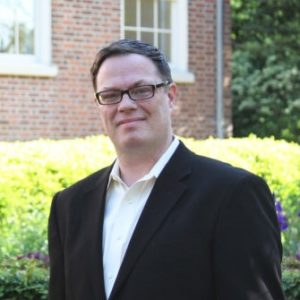
A man wearing glasses and a black blazer over a white shirt stands outside in front of a brick building and greenery.

Research by Greg Strauss, OIBR Fellow and Assistant Professor of Psychology at UGA shows that targeting one particular symptom of schizophrenia has a positive effect on other symptoms, offering significant promise for treating an aspect of schizophrenia that currently has no pharmaceutical options.

A team led by Dr. Strauss published a study confirming that successfully treating the symptom avolition—reduced motivation—has a positive effect on other negative symptoms of schizophrenia. The results, published in Schizophrenia Bulletin, were based on a phase 2b trial of the compound roluperidone by Minerva Neurosciences.

“There’s a lot of hope that Minerva’s phase 3 trial will show a similar improvement in negative symptoms,” said Strauss. “This could be the first drug that receives an indication for negative symptoms of schizophrenia from the Food and Drug Administration, which is perhaps the biggest need in the field of psychiatry. It would be a monumental benefit to the lives of people with schizophrenia.”

Schizophrenia is the leading medical cause of functional disability worldwide, according to several population-based studies of health. People with functional disability struggle to hold a job, build social relationships and maintain the independent activities of daily living. In the U.S., it can also refer to receiving government-supported disability funds.

“The government spends a tremendous amount of money every year on functional disability,” Strauss said. “Negative symptoms are the strongest predictor of functional disability, but no medication has received FDA approval for treating them. Therefore, they are a critical treatment target.”

Read more

To read the study, visit: https://academic.oup.com/schizophreniabulletin/advance-articles

COSSA’s 2020 College and University Rankings for Federal Social and Behavioral Science R&D

Each year, the Consortium of Social Science Associations (COSSA) releases their college and university rankings for federal social and behavioral science research and development. This year, the University of Georgia ranked #28 with $16.3m of funding for social science for FY 2018. This make us the highest ranked school in Georgia! COSSA 2020 Rankings

This data comes from the National Center for Science and Education Statistics’ Higher Education Research and Development (HERD) Survey for fiscal year 2018. The “Federal R&D” column lists combined federal research and development expenditures for social sciences, psychology, law, communications, and social work.

Shining a Spotlight on the Hidden World of Human Trafficking

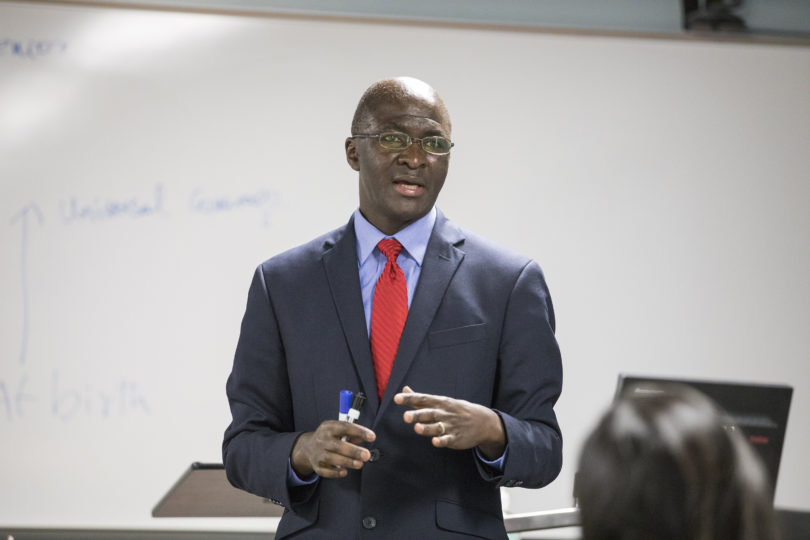
A man in a navy suit and red tie speaks in front of a whiteboard, holding a marker, with a blurred audience member in the foreground.

“People don’t realize that there’s trafficking in Athens, in Atlanta, in the U.S. It’s not something people talk a lot about in this country,” said David Okech, OIBR Fellow and Associate Professor in the School of Social Work.

Dr. Okech, along with the UGA-founded international consortium Africa Programming and Research Initiative to End Slavery (APRIES), recently received a $15.75 million grant from the U.S. Department of State, Office to Monitor and Combat Trafficking in Persons, to study how, why and how frequently trafficking occurs in West Africa.

Experts estimate there are tens of millions of people trapped in what they call modern slavery. The U.S. Department of State defines trafficking as an umbrella term that encompasses both sex trafficking and forced labor. That’s something Okech wants to change.

“In addition to strengthening current anti-trafficking efforts, the goal of APRIES is to build a global community of researchers and learners in the science of estimating human trafficking prevalence,” said Okech.

The grant scales up a $4 million grant Okech previously received to collect data on the prevalence of human trafficking in parts of Sierra Leone and Guinea, and enables Okech’s team to study the prevalence of trafficking in Senegal as well. The grant also gives organizations sorely needed funding to implement preventive programs and provide support to trafficking survivors. The grant will also launch a first-of-its-kind forum that will enlist scholars around the world to test and develop the best ways to estimate the prevalence of human trafficking.

“We need the numbers,” said Okech. “I don’t want to be told that it’s 1 million or it’s 10 million. We need a more accurate estimate so that our programming and policy work is commensurate to the problem.”

Other investigators on the project are Jody Clay-Warner, UGA Josiah Meigs Distinguished Teaching Professor of Sociology and Associate DIrector for the Owens Institute for Behavioral Research. Also on the team is Tamora Callands, assistant professor of health promotion and behavior, UGA College of Public Health, and Alex Balch, professor of politics, University of Liverpool. Lydia Aletraris, Ph.D., will serve as project coordinator for the Prevalence Reduction Innovation Forum. Claire Bolton, Ph.D., will serve as program manager of APRIES.

Read more about this research project. For more information about APRIES, visit apries.uga.edu.

Dr. Gene Brody to headline NIH inaugural Rural Health Seminar

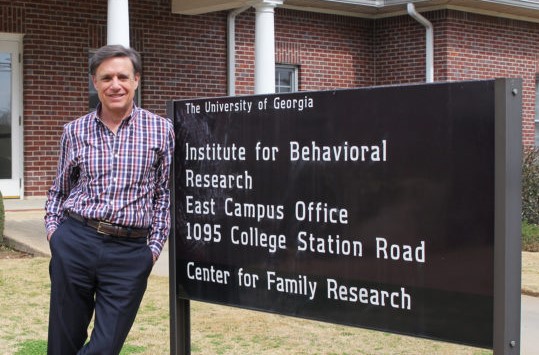
A man stands next to a sign for the University of Georgia Institute for Behavioral Research and Center for Family Research at 1095 College Station Road.
Dr. Gene Brody

Gene Brody, Regents Professor, OIBR Fellow and director of UGA’s Center for Family Research, will deliver the keynote address on Monday, Nov. 18, at the National Institutes of Health’s inaugural Rural Health Seminar in Bethesda, Maryland.

Brody’s talk, titled “Resilience to Adversity and the Early Origins of Disease,” will examine how living in conditions of economic hardship and other stressors particularly influence both the biology and physiology of rural African American children, making them more vulnerable to the chronic diseases of aging when they are adults. This phenomenon, called “weathering,” is a major focus of Brody’s research, conducted by the Center for Family Research that is made possible by funding from multiple NIH institutes. The talk will also discuss how some individuals overcome this weathering and demonstrate tremendous resilience.

The Rural Health Seminar will bring together researchers, medical practitioners and others to explore topics in rural health and to share research ideas for how innovations in clinical and translational science could improve rural health outcomes.

The event will be webcast live from the following address: https://videocast.nih.gov/summary.asp?live=35176

New Interdisciplinary Research Grants Awarded

Congratulations to the Owens Institute Fellows and Affiliates who have been awarded funds through the second round of Presidential Interdisciplinary Seed Grants.

The winning proposals and faculty teams are:

  • Overcoming Physical Distances with the Virtual Family Room: Virtual and Augmented Reality Communication Platforms for Deployed Military Families

Sun Joo “Grace” Ahn (OIBR Fellow; Primary Investigator; Grady College of Journalism and Mass Communication), Kyle Johnson (College of Engineering), Catherine O’Neal (OIBR Fellow; College of Family and Consumer Sciences) and Dawn Robinson (OIBR Fellow; Franklin College of Arts and Sciences).

  • Creating a Healthier Georgia through Diabetes Prevention

Alison Berg (Primary Investigator) and Joan Koonce (College of Family and Consumer Sciences) and Ellen Evans (OIBR Affiliate; College of Education).

  • Building a National Center of Excellence for Nature-Based Infrastructure Solutions

Brian Bledsoe (Primary Investigator; College of Engineering), Jon Calabria and Brian Orland (OIBR Affiliate; College of Environment and Design), Susana Ferreira and Craig Landry (College of Agricultural and Environmental Sciences), Rhett Jackson and Nathan Nibbelink (OIBR Fellow; Warnell School of Forestry and Natural Resources), Shana Jones (Carl Vinson Institute of Government), Don Nelson and Marshall Shepherd (Franklin College of Arts and Sciences), Scott Pippin and Mark Risse (Marine Extension and Georgia Sea Grant), Amy Rosemond (Odum School of Ecology) and Meredith Welch-Divine (Graduate School).

  • Establishing a New Animal Model to Assess Influenza-Tuberculosis Co-Infection and Vaccination

Fred Quinn (Primary Investigator), Steve Divers, Ankita Garg, Tuhina Gupta, Russ Karls, Balazs Rada, Ted Ross and Kaori Sakamoto (College of Veterinary Medicine); Steve Harvey (Office of Research); Shannon Quinn (OIBR Affiliate; Franklin College of Arts and Sciences); Christopher Whalen (OIBR Affiliate; College of Public Health) and external collaborators.

  • Impact of the School and Surrounding Environment on Implementation of Georgia’s Statewide Childhood Obesity Policy

Janani Thapa (Primary Investigator), Marsha Davis, Jennifer Gay (OIBR GDP), Justin Ingles and Donglan “Stacy” Zhang (College of Public Health); Lan Mu (Franklin College of Arts and Sciences); Michael Schmidt (College of Education); Chen Zhen (College of Agricultural and Environmental Sciences) and external collaborators.

These seed grants will facilitate research projects spanning 15 colleges, schools and other units at UGA. The work enabled by these grants will support subsequent applications for external funding.

Read more about the Presidential Interdisciplinary Seed Grant program.

Focus on OIBR Fellow Dr. Assaf Oshri

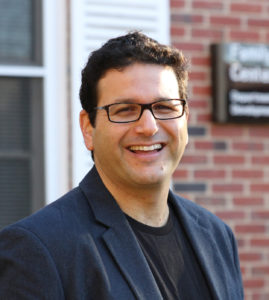
A man with dark hair and glasses, wearing a dark blazer and black shirt, smiles while standing outside in front of a brick building.

UGA Today recently featured Dr. Assaf Oshri for their Focus on Faculty article.

Dr. Oshri is a Fellow with OIBR and an associate professor in the College of Family and Consumer Science. He is also the Director of the Stress, Trauma, Adversity and Resilience work group and the director of the college’s Youth Development Institute.

Read more about Dr. Oshri’s background, awards and his research on at-risk youth overcoming exposure to early life adversity.

NASA Taps Dorothy Carter to Study Teamwork Issues

A woman with short blonde hair stands outside in front of a brick building and trees, wearing a black and white checkered top and smiling at the camera.

Fifty years ago this month, NASA put two astronauts on the moon. NASA’s next giant leap will be sending humans to Mars, projected for the 2030s, and a University of Georgia researcher is partnering with the space agency to explore the challenges of such a mission.

Dorothy Carter, OIBR Fellow and Psychology I/O Assistant Professor, is an expert in successful communication and collaboration among multiple teams and this will be an essential part of deep space travel. Carter specializes in teamwork and examines how multiple groups work together in pursuit of larger goals.

“I’m especially interested in understanding how large systems comprised of multiple teams from different areas of expertise work together effectively,” said Carter. “Breakdowns often occur when people with different perspectives try to collaborate, but collaboration across disciplines is essential in order to address many of the most important problems facing humanity.”

Carter is principal investigator on Project FUSION (Facilitating Unified Systems of Interdependent Organizational Networks), funded by a $1 million grant from the National Aeronautics and Space Administration.

Project FUSION aims to better understand how the spaceflight “multi-team systems” involved in a long-duration space exploration mission will need to function in order to send a team of humans to Mars successfully.

Read more about Dr. Carter’s research.

Different Factors Affect Health of Military Couples, According to Catie O’Neal

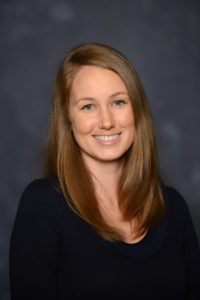
A woman with straight, light brown hair and a navy blue top smiles in front of a plain dark background.

Catherine O’Neil

Research led by OIBR Fellow and research scientist Catherine O’Neal, with UGA’s College of Family and Consumer Sciences, says enhancing community connections for service members and their civilian spouses may be important in supporting their mental and physical health.

“Military families face challenges, but they should not be defined as challenged families, as that implies dysfunction,” she said. “We work hard to avoid the stigma that because they face situational stressors related to military service, such as deployments, they always experience poor outcomes. Some of them do, and some of them don’t. That is one driving interest in my research—understanding why some people thrive in a challenging situation, and others don’t fare so well.”

Working with colleagues at multiple institutions, O’Neal evaluated data gathered from 273 families to identify the factors that are related to mental health, like anxiety and depression, and that have an impact on physical health for active duty spouses and their civilian partners.

They found a key difference between the service members and their spouses: Service members who were more connected to their military community reported better mental health. Their civilian spouses, on the other hand, reported better mental health when they were more satisfied with military life generally, suggesting quality of life within the military culture is a more influential factor for civilian spouses than being connected to, and engaged with, the military community.

Dr. O’Neal was the lead author on the study, which was published online in the journal Military Psychology.

Since 2016, O’Neal has led or co-authored 14 papers on contexts surrounding military families. She also serves as co-investigator and lead of the research team for Military REACH (MilitaryREACH.org), a project that supports military families by mobilizing research into practical applications.

Tessa Andrews Awarded Grant from NSF CAREER Program

Tessa Andrews

Tessa Andrews, OIBR Fellow and assistant professor of Genetics, was recently awarded a grant from the National Science Foundation CAREER program, which supports research and outstanding teaching by junior faculty.

Dr. Andrews will lead a five-year, national scale research and education project on the integration of evidence based teaching strategies and using what works most effectively for student learning and to better understand and support the evidence-based teaching in biology.

The research aims to clarify the teaching knowledge that is particularly important for using evidence-based instructional practices in large undergraduate courses. The educational initiatives will design and test a new model of teaching training for graduate students and will expand a video resource library for faculty who want to learn more about evidence-based teaching in science.

Active-learning instruction engages students directly in the learning process and has proven effective, but that effectiveness can vary considerably based on the instructor.

“The need is particularly acute for large biology courses,” said Andrews, whose team will collect data from biology instructors around the country. “The work will focus on the knowledge that college faculty need about teaching and learning to effectively plan and implement active-learning strategies in large classes.”

Read more about Dr. Andrews’ research project here.